How to Lock a Door Without a Lock in an Emergency: Practical Tips and Tricks
- Improvised solutions work in emergencies: Even without a lock, you can secure doors using furniture, wedges, straps, or household items to create barriers.
- Different doors require different methods: Sliding, inward-swinging, wooden, and metal doors each need tailored approaches for effective security.
- Furniture and heavy objects are your first line of defense: Using dressers, tables, chairs, or appliances can block doors and add resistance.
- Simple household items can be effective: Shoes, towels, belts, ropes, broomsticks, and books can temporarily secure doors in a pinch.
- Combine methods for maximum protection: Using wedges, straps, and furniture together increases security and slows entry.
- Prioritize safety and preparedness: Always ensure you have a clear exit path, test your improvised solutions, and consider long-term security upgrades like portable locks or door braces.
Emergencies can happen at any time, and sometimes you might find yourself needing to secure a door without a traditional lock. Whether it’s a sudden break-in, a power outage, or being stuck somewhere, knowing how to lock a door without a lock can give you peace of mind. In this guide, we’ll explore practical ways to secure doors using items you likely already have, along with tips to make your improvised solutions as effective as possible.
Why You Might Need to Lock a Door Without a Lock
Not all doors come equipped with locks, and not every situation allows you to reach for your keys. Some common scenarios include:
- Hotel or Airbnb stays without deadbolts
- Sliding closet or patio doors
- Dormitory rooms or temporary housing
- Broken locks that can’t be fixed immediately
- Sudden emergencies where you need to barricade a door
Understanding the “why” can help you prepare mentally and physically for quick solutions. The key is improvisation—making the most of what’s on hand to secure your space.
Can You Really Lock a Door Without a Lock?
Yes, you can. While nothing replaces a proper lock, temporary solutions can create a physical barrier that slows or prevents someone from entering. Most methods work by:
- Blocking the door from opening
- Creating friction or pressure against the door frame
- Using everyday objects to wedge or barricade the door
Some techniques are better suited for wooden doors, while others work on metal or sliding doors. The key is to match the method to your situation and the type of door you need to secure.
Using Furniture as a Barricade
One of the simplest ways to lock a door in an emergency is by using heavy furniture. This method works well on inward-swinging doors. Here’s how:
- Move a heavy object: A dresser, desk, or table can block the door from opening.
- Angle furniture against the door handle: Place the furniture so it leans into the door, creating pressure that resists force.
- Combine multiple pieces: If one item isn’t enough, stack or layer furniture for added resistance.
This method is quick, effective, and doesn’t require any special tools. It’s especially helpful in situations like apartment security or during unexpected emergencies.
Using a Door Wedge or Improvised Items
Even if you don’t have a traditional doorstop, you can create one with household items:
- Shoes or boots: Place them at the base of the door to prevent it from sliding open.
- Books or bricks: Stack heavy books or bricks to wedge under the door.
- Folded towels or blankets: Roll them tightly and place them at the door gap for a softer but still effective barrier.
This method works best on doors with slight gaps underneath. Keep in mind that wedge-based solutions are easier to remove in a hurry, so they balance security and accessibility.
Using a Belt, Rope, or Strap
If the door has a handle or a knob, you can secure it using belts, ropes, or similar straps:
- Loop and tie: Wrap the belt or rope around the door handle and a nearby stable object like a railing, pipe, or heavy furniture.
- Pull tight: Make sure the strap is taut, so the door cannot easily swing open.
- Double-check strength: A thin or worn-out belt might not hold, so use a strong strap whenever possible.
This method is especially effective in emergencies because most people have belts or ropes available, even in a hotel or dorm room.
Sliding or Pocket Doors: How to Lock Without a Lock
Sliding doors are a different challenge because they don’t have knobs or conventional locks. Here are a few solutions:
- Use a broomstick or rod: Place it in the track to block the door from sliding.
- Insert a wedge: Wooden or heavy objects can be used to jam the door.
- Temporary bar: If you have a metal or wooden rod, position it horizontally across the door’s width for extra security.
Sliding doors are often the most vulnerable, so taking these extra precautions is crucial in emergencies.
Can You Use a Key or Card to Lock a Door?
Sometimes a door may have a latch or simple lock mechanism. In emergencies, you can try unconventional methods:
- Credit card trick: For spring latch locks, a stiff card can sometimes push the latch back, temporarily securing the door if done carefully.
- Remove and block the latch: If you have access to the lock mechanism, removing the latch and jamming the door with a wedge can prevent entry.
Note: These methods are temporary and work best as emergency measures rather than long-term security solutions.
Using Household Items for Emergency Locking
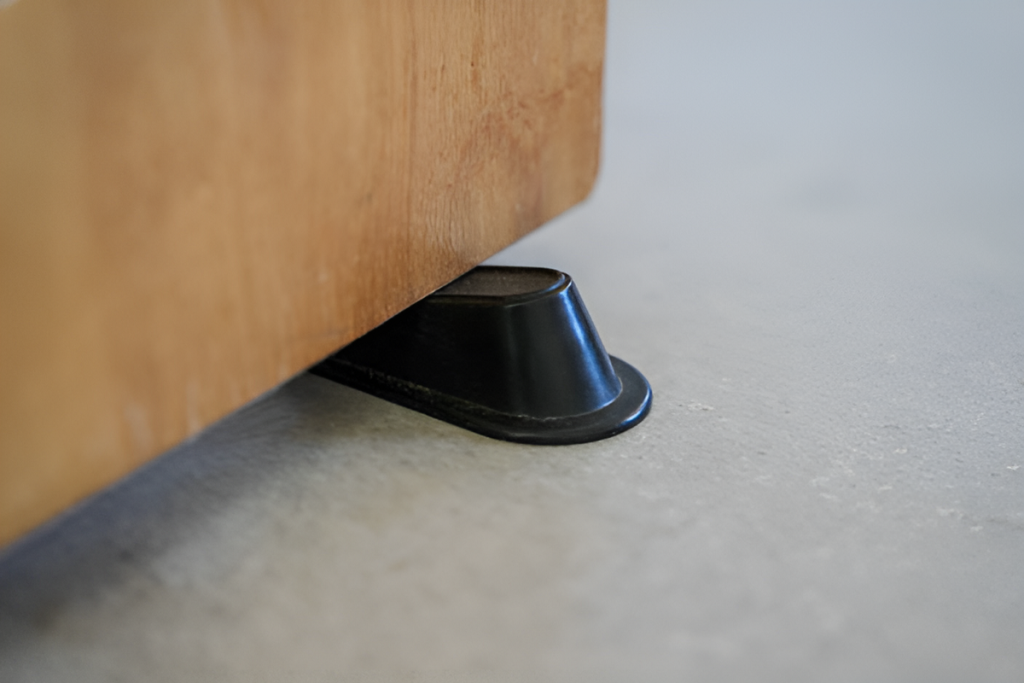
Everyday household items can be surprisingly effective when used creatively. Some options include:
- Chairs or stools: Lean against the door handle for extra resistance.
- Extension cords or belts: Tie the handle to a secure object.
- Doorstops or rubber wedges: Create friction to prevent movement.
- Heavy appliances or trash bins: Block doors in low-light or urgent scenarios.
Think of anything heavy, sturdy, and non-slip as a potential barrier in emergencies.
Tips for Maximum Effectiveness
To make your improvised door locks as secure as possible:
- Check the door type: Wood, metal, and glass doors behave differently.
- Combine methods: Furniture + wedge + strap = more resistance.
- Test before relying: Push gently to see if it holds.
- Keep exits in mind: Make sure you can unlock or remove your barrier if you need to escape.
- Stay calm: Improvised solutions are easier to use when you think clearly under pressure.
When to Use Improvised Locking Techniques
Improvised methods are suitable in situations like:
- Unexpected visitors or intruders
- Hotel or temporary housing with no locks
- Children or pets accidentally opening doors
- Natural disasters where doors might swing open
They are not a replacement for permanent security but are useful as temporary measures.
Safety Precautions
While improvising, always prioritize safety:
- Avoid fragile objects that could break and cause injury.
- Ensure you have a clear escape path if needed.
- Do not rely solely on these methods if the threat is serious—call authorities if necessary.
Improvised methods are about buying time, not guaranteed security.
Can You Make a Door Safer Long-Term?
If you frequently find yourself needing emergency door locks or wondering how to lock a door more effectively, consider these upgrades:
- Portable door locks: Compact devices that don’t require installation.
- Security bars for sliding doors: Strong, adjustable bars that block sliding panels.
- Door braces: Heavy-duty braces that fit under the door handle for inward-swinging doors.
- Reinforced door frames: Strengthening the door frame makes all emergency methods more effective.
These tools are inexpensive, portable, and can provide peace of mind beyond emergencies.
DIY Tricks for Quick Security
Some quick DIY hacks can improve door security in urgent situations:
- Tie a scarf, rope, or strap to the handle and secure it to furniture.
- Wedge a shoe or rolled towel in front of the door to prevent swinging.
- Use a broomstick to block sliding doors.
- Stack books or boxes to increase resistance against inward-swinging doors.
Even simple actions like these can delay entry, giving you valuable time.
Final Thoughts
Locking a door without a traditional lock is not as difficult as it sounds. With some creativity and quick thinking, you can secure your space using furniture, wedges, ropes, and other household items. These methods are not a replacement for proper security, but they can be lifesavers in emergencies. The key is preparation: knowing what tools you have on hand, understanding your door type, and combining methods for maximum effectiveness.
Whether it’s a hotel stay, an apartment without deadbolts, or a sudden emergency, these techniques can give you the confidence to protect yourself and your loved ones until proper help or a permanent solution is available.